Got questions about paperwork, performance or planning? You’re not alone. This page gathers the most common queries we hear — from “what is a FENSA certificate?” to “are flush sash windows any good?” — with plain-English answers you can act on. If you don’t see your question covered, ask us and we’ll add it here for other homeowners.
FENSA, regulations & paperwork
What is a FENSA certificate — and why do I need one?
A FENSA certificate is proof that your replacement windows/doors were installed by a competent installer and comply with Building Regulations (thermal performance, safety glazing, ventilation, and where applicable, egress). You’ll be asked for it when selling your home. After installation we register your project and the certificate is issued to you directly. Keep it with your house documents; if you ever misplace it, duplicates can be obtained.
Do I need planning permission for new windows or doors?
Like-for-like replacements usually don’t need planning permission. You still must meet Building Regulations (U-values, safety glass, ventilation). If you’re changing window style on a conservation-sensitive street, adding a bay, or altering openings, planning or listed building consent may be required. We flag this at survey and help you take the right steps.
What are trickle vents and do I need them?
Trickle vents allow background ventilation without opening the sash. Whether you need them depends on the room’s ventilation strategy and current regs. Where vents are required, we specify discreet, colour-matched options that don’t spoil the sightlines.
Products & performance
Are flush sash windows any good?
Yes — are flush sash windows any good is a question we hear often, and the short answer is they offer the clean, timber-like look many streets demand with modern insulation and security. The sash sits level with the outer frame (no “lip”), creating slim, elegant lines. Choose quality multi-chamber frames, warm-edge double or triple glazing, and proper installation to get the full benefit: low U-values, quiet rooms and a premium façade.
How long do uPVC windows last?
With quality profiles and correct fitting, how long do uPVC windows last? Typically 20–30+ years. Lifespan depends on exposure (coastal areas weather faster), colour/foil choice, and maintenance (simple cleaning and light lubrication of hinges/locks). Good installation is crucial: poorly supported frames and weak seals age early.
Are composite doors secure?
Modern composites are very secure. Are composite doors secure enough for a front entrance? Yes — specified with multi-point locks, high-security cylinders (anti-snap, anti-pick, anti-drill) and laminated safety glass in any vision panels, they comfortably meet robust standards (PAS 24 options available). They also hold their shape in wet/cold weather, so locks keep aligning.
Double vs triple glazing — which should I choose?
Double glazing (A-rated) satisfies most homes for warmth and condensation control. Triple glazing can help on busy roads (noise) or exposed elevations (cold/windy). Many customers choose a hybrid: triple to the front bedrooms, high-spec double elsewhere for best value.
What U-value should I expect from new windows?
For replacement windows, expect low U-values that meet or beat current standards when paired with low-E coatings, argon gas fill and warm-edge spacers. Remember: airtight installation at the perimeter is just as important as glass spec.
Will French doors or patio doors be draughty in winter?
Not with modern compression seals, quality glazing and correct fitting. We calibrate locks and meeting stiles so doors close with firm, even pressure — the secret to winter comfort.
Style, heritage & conservation
Can you have double glazing in conservation areas?
Often, yes — but it needs sensitivity. Can you have double glazing in conservation areas depends on the street and council. We typically specify flush sash or slim-sightline systems with wood-effect foils and authentic glazing bars that respect the original look. In listed buildings, secondary glazing may be the route; we’ll advise case by case.
Will uPVC or aluminium look “out of place” on my period home?
Not if the design is handled carefully. Flush lines, correct bar patterns, heritage colours (e.g., Creams, Greys, Greens) and neat seals make modern frames sit comfortably on older façades while quietly improving comfort.
A three-bed house of windows typically takes 1–3 days, depending on access, bays and any making-good. Doors with side panels can be a same-day job; large sliders/bi-folds need longer for calibration and finishing. We confirm timelines after survey.
How messy is the work?
We protect floors and furnishings, remove old frames and glass carefully, and tidy daily. Waste leaves with us. You’ll see steady progress room by room.
What maintenance do new windows and doors need?
Little. Clean frames and glass with a mild solution; keep drainage slots clear; lightly oil hinges and locks once or twice a year. If handle force increases, call us — small adjustments prevent wear.
Can you repair instead of replace?
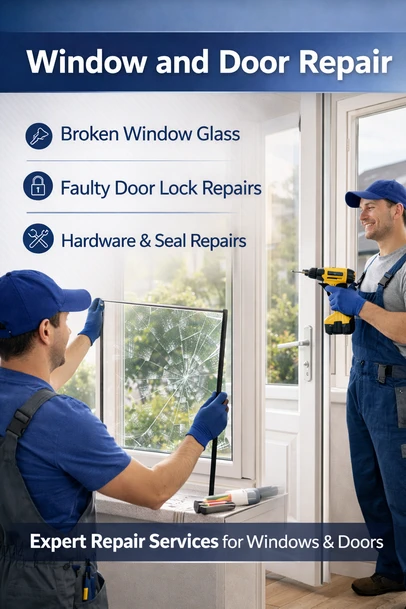
Yes. Hinges, handles, gearboxes and misted double-glazed units are all replaceable. If a cost-effective window repairs or door repair will restore performance, we’ll recommend it first.
Why do sealed units mist up between panes?
That’s a failed perimeter seal. The remedy is a new double-glazed unit (we match coatings, spacer thickness and any privacy/acoustic spec). Replacing just the glass restores clarity and warmth without changing the frame.
Security & safety
What makes a door secure in real life?
Three things working together:
Locking: multi-point locks correctly aligned to robust keeps.
Cylinder: high-security type with anti-snap/anti-drill features.
Glazing & frame: laminated panes at risk points and frames fixed properly to the wall. Add hinge bolts and restrictors where appropriate for upstairs windows.
Is laminated glass worth it?
For front doors, low-level panes and vulnerable windows, yes. Laminated glass stays together if broken and resists forced entry better than standard toughened alone. It also improves acoustics modestly.
Are trickle vents a security risk?
No — they provide background ventilation and are too small to be a security concern. We specify neat, secure designs colour-matched to your frames.
Costs, quotes & finance
Why do quotes vary so much between companies?
Spec and method. Frame system, glazing (low-E, laminate, acoustic), colour foils, hardware, and installation standards (packers, fixings, air-seals) all change performance and price. We provide itemised quotes so you can see where every pound goes.
Do you offer windows on finance?
Yes. Options include interest-free promotions (when available), low fixed monthly payments and Buy Now Pay Later. We’ll show finance side by side with the cash price so you can compare easily.
Is there a deposit?
Typically, yes — sized to suit your project and finance choice. Everything is documented clearly before you commit.
Can I phase the work?
Absolutely. We’ll design the whole house now so phase-by-phase installations match perfectly later.
Materials & options
uPVC vs aluminium — which is best?
uPVC: excellent value, strong thermal performance, wide colour/wood-effect choices. Aluminium: slimmer sightlines, superb rigidity for big panes/bi-folds, thermally broken frames for efficiency. Many homes mix both: uPVC for most windows, aluminium for sliders/bi-folds.
What’s “warm-edge” and does it matter?
Warm-edge spacers replace the old metallic spacer at the glass edge, reducing heat loss and edge condensation risk. They’re a small component that makes a noticeable comfort difference.
Acoustic glazing — will it really make rooms quieter?
Yes, when used where noise is worst and combined with airtight installation. Asymmetric or laminated units target road noise frequencies better than standard double glazing.
Roofline & porches
Do fascias/soffits need ventilation?
Yes — continuous or discreet soffit vents help keep the loft dry. We also fit eaves protection trays so water runs into the gutter, not onto timber edges.
Do porches need permission?
Many small porches fall under permitted development if they meet size/location limits. We’ll advise before design and confirm if simple approvals are needed.
Still deciding? Here’s a quick decision checklist
What matters most: warmth, quiet, security, style — or a mix?
Any conservation or street-character considerations?
Which rooms suffer most (cold bedrooms, noisy front, steamy bathrooms)?
Frontage finish: flush lines, heritage bars, or clean modern profiles?
Phasing or full-house in one go? Finance or cash?
If you tick those off, choosing the right specification becomes straightforward.
Ask us anything — we’ll give a clear, no-pressure answer
Whether it’s paperwork, performance or planning, send your questions and a couple of photos and we’ll respond with practical guidance you can use. Prefer to speak to a person? Call 0800 233 5576 and one of the team will help.
ARRANAGE A VISIT
Request your FREE no-obligation design visit now
Heritage Expertise
A-rated Performance
No Pressure Selling
Long Guarantees
What We Do
Just some of our services
Request a free home survey and quote for new windows or doors